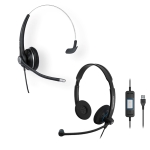
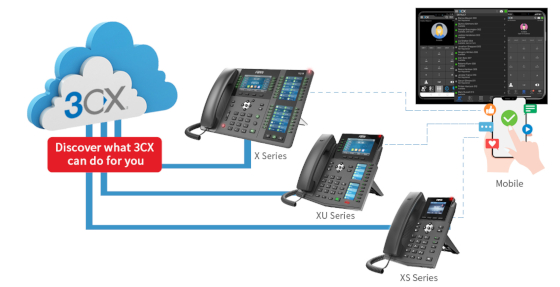
Efficient and reliable communication couldn’t be more important in today’s climate. Guaranteeing advanced integration and full interoperability between 3CX systems, Fanvil IP Phones also feature large colour screens, HD audio, PoE and rich extension functions, offering customers a high-quality communication solution for working remotely.
Benefits of 3CX & Fanvil
Get set up in minutes with hassle-free configuration
Secure calls with end-to-end encryption
Receive and make calls, see the status of your colleagues, chat, schedule conferences and access the company phonebook.
FREE for unlimited extensions and Low annual license prices allowing you to slash your phone bill for on the road/at home staff members.
Control your own phone numbers as well as your own SIP Trunk and cloud provider
Easy to add & manage extensions remotely as well as configuration & firmware
Adaptable and flexible with modern Android & iOS apps at no extra charge
All available for next day delivery direct to site from ProVu, your one-stop shop.
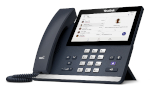
Get ready for the new Yealink Teams-tailored IP phone! The Yealink MP56 replaces the T56A and is designed to perfectly integrate with Microsoft Teams systems. With a dedicated Teams button, the MP56 delivers a feature-rich user experience that your clients Teams shouldn’t be without!
Key Features include:
Android 9 OS
7 inch (800 x 480 pixel) capacitive touch screen
Supports Office 365, and upgradability of device applications to Teams or SFB
Yealink Noise Proof Technology
Teams-tailored user interface
Built-in Bluetooth 4.2 & Dual band 2.4G/5G Wi-Fi
Find out more about the Teams professional MP56 or get in touch with one of our Yealink specialists to place your order today!
This blog post is going to show you how to configure a Polycom VVX device to capture the SIP traffic flowing between the device and SIP Server.
This can be useful to try and diagnose SIP registration, or outbound calling issues.
Step 1 – Accessing the web user interface
First we need to find the IP address of the Polycom device. This can be done by pressing the ‘Home‘ button (symbol of a house) on the phone and scrolling through the menu and selecting ‘Settings’ > ‘Status’ > ‘Network’ > ‘TCP/IP Parameters’ and on this page make a note of the values in the “IPv4 Addr” field.
Now we have the IP address of the device, we need to access the web user interface. This can be done by launching a web browser and inputing the IP address in to the top search bar. You DO need to define ‘https://‘ and port ‘443‘ as the transport type and communication port as shown in the image below:
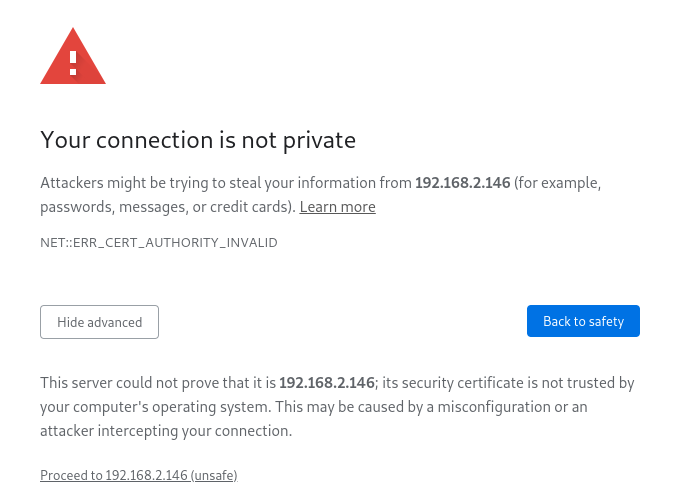
Once you have entered the IP address it may present a warning saying the connection is not private:
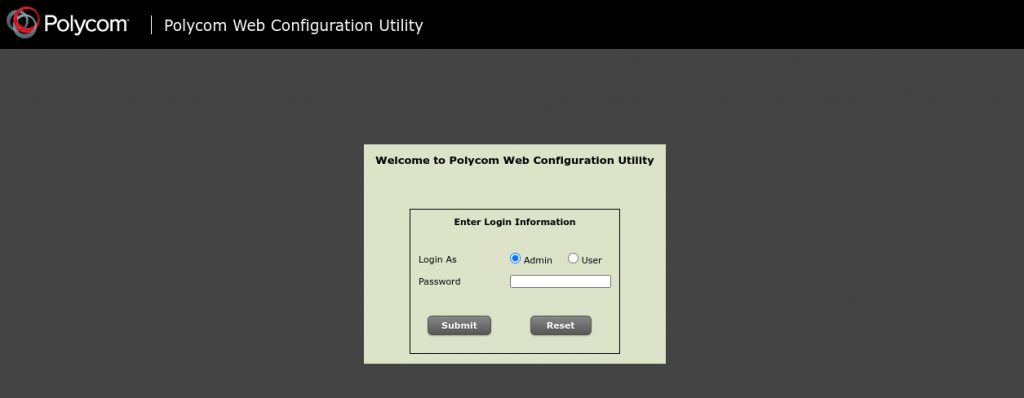
This is to be expected and you are seeing this because the TLS certificate on the device is not signed by a certificate authority recognised by the browser. Click the ‘Advanced’ button and then click “proceed to (‘IP Address’)”. Once you have done that you should be at the login page as shown in the image below.
To login, select the ‘Admin’ user and enter the password. By default this is ‘456’.
Step 2 – Configuring the log level
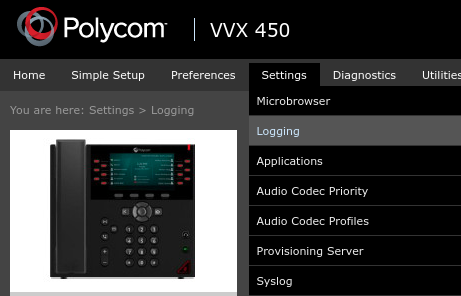
Once logged in go to ‘Settings‘ > ‘Logging‘
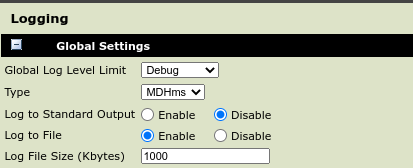
Once the ‘Logging’ page loads set the ‘Global Log Level Limit‘ to ‘Debug‘ and set the ‘Log File Size‘ to ‘1000‘ as shown in the image below.
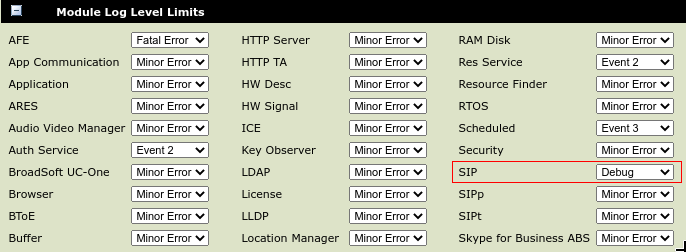
Next Expand the ‘Module Log Level Limits‘ section and change ‘SIP‘ to ‘Debug‘ as shown in the image below and click save at the bottom of the page.
Step 3 – Replicating the issue and downloading the log
Now the phone is configured to log the SIP packets flowing through the device it’s time to replicate the issue. If your issue is related to SIP Registrations a reboot of your device can be done to force a registration.
If your problem is with outbound calls not progressing you can go ahead and attempt to make a call.
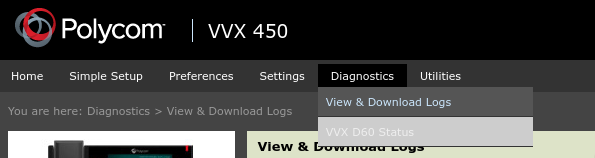
Once the fault has been replicated, login to the web user interface and this time go to ‘Diagnostics‘ > ‘View & Download logs‘
Once on this page you can view the logging information, but if a support engineer at ProVu has asked you to capture these files, please export all three file types by using the radial button below to change which file is downloaded and then click the ‘Export’ button.
Important – Once you’ve exported the logs, be sure to go back to ‘Settings’ > ‘Logging’ and click the ‘Reset to ‘Default’ button at the bottom of the page to revert the changes we’ve made.
This blog post is going to outline the steps to take to source the required file. If you contact the ProVu support team experiencing Registration or Call issues with the Cisco CP series of phones, we will require a PCAP trace capturing the problem to help identify the cause of the issue.
Step 1 – Access the web user interface
In order to access the web user interface of your device you will need to find the IP address. There are a few ways this can be done such as logging in to your router and checking the DHCP table, but most likely the easiest method and the one this blog post is going to cover is to get it physically from the phone.
You’ll need to press the ‘Settings‘ button on the phone which has the symbol of a cog. Once you have pressed this button scroll through the options available and select ‘Status‘ > ‘Network Status‘ > ‘IPV4 Status‘ and make a note of the IP address.
Once you have the IP address, open a web browser and type the IP address in to the top search bar and press enter as displayed in the image below.
Once you have pressed enter it should take you to the ‘Info‘ page. On here you need to select the admin user and then advanced options by clicking the red outlined text in the image below.
(By default there is no admin password applied but if you have set one it will require this)
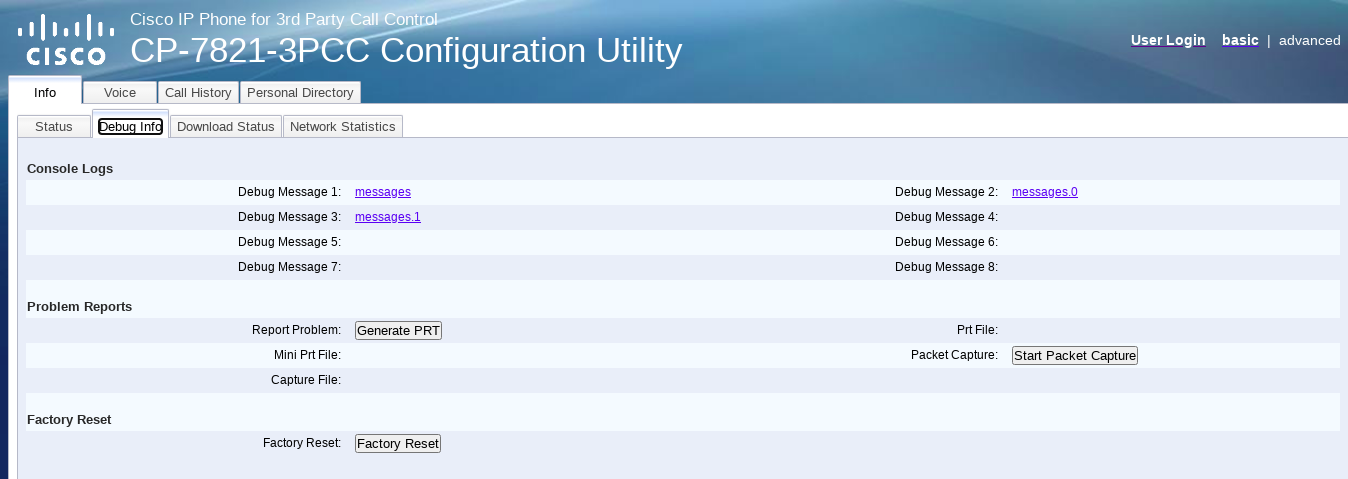
Once you have done that go to ‘Info‘ > ‘Debug Info‘ and you should be on the page below.
Step 2 – Capturing the ‘.pcap’ trace
On the ‘Info‘ > ‘Debug Info‘ page there is a section under ‘Problem Reports‘ that says “Packet Capture” with a button next to it. Follow the steps below to generate the file.
Press ‘Start Packet Capture‘ and select the capture filter to ‘All‘.
Replicate the issue – if your issue is related to outbound calls failing, attempt to place an outbound call. If your issue is related to Registration issues you can force a Registration by disabling and enabling the SIP Account:
To do this you need to go to ‘Voice’ > ‘Ext 1‘ and change ‘Line Enabled‘ to ‘No‘. Then click ‘Submit all Changes‘ at the bottom of the page. Wait 30 seconds for the web user interface to reload and then go back to ‘Voice‘ > ‘Ext 1‘ tab and change ‘Line Enable‘ to ‘Yes‘ and click ‘Submit all changes‘.
Press the button next to ‘Packet Capture‘ again (this time it should say “Stop Packet Capture“)
Once the trace has been stopped and generated you can download it from “Capture File” link outlined in the image below.
Once you have download the file please send it to the engineer requesting it, or to support@provu.co.uk if this is the first time reporting the issue.
We have received notice from APC that due to the increased demand for deliveries going to Tier 4 restricted areas, they are suspending their service to these locations until 29th December. This largely affects the South East, London and Wales.
During this time any orders to these areas will automatically be booked on with DPD instead. Please note, we have an earlier collection time with DPD and therefore the cut off for same day despatch is 15:45.
We are working hard to make sure deliveries run as smoothly as possible during these difficult times, however delays are inevitable.
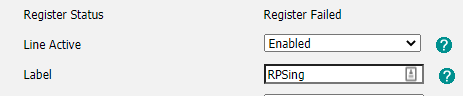
If you have recently factory reset a Yealink handset then you may see the following notifications on your devices screen. ‘input sn‘ on the first line (top left of the screen) or ‘RPSing’ on the account information on the web interface.
In this blog, we will take you through a few short steps you can take to solve this issue and have your phones back up and running as soon as possible.
Step 1:
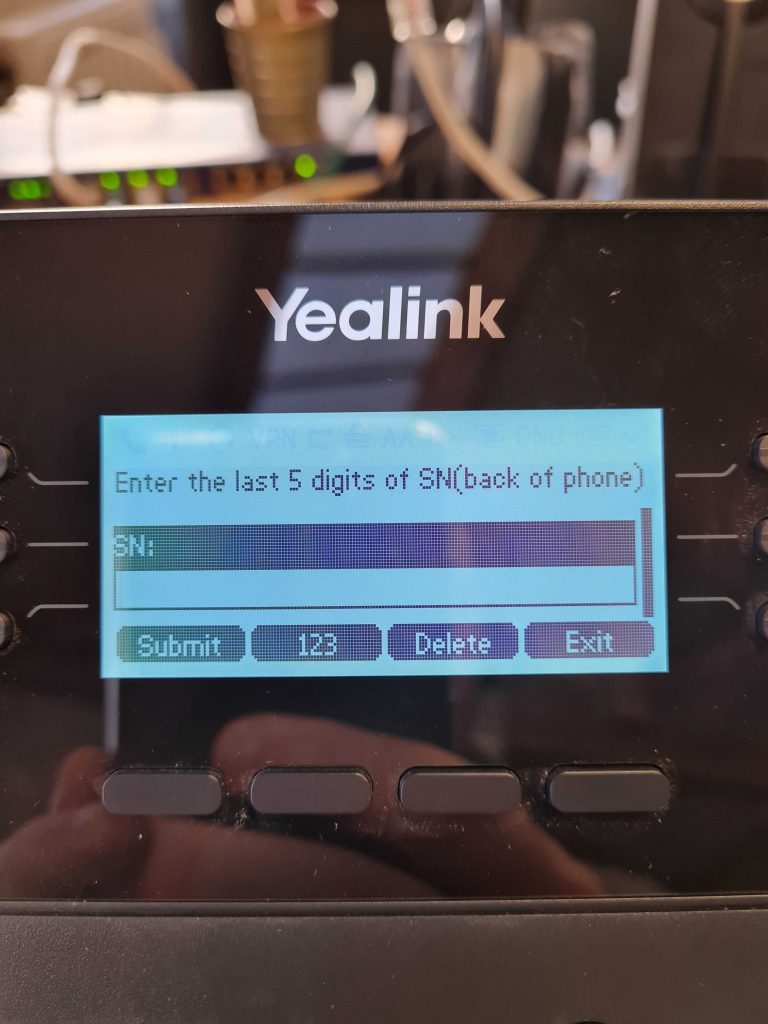
Click on the function key where ‘input sn‘ is located. You should then be presented with the following page:
Enter the last 5 digits of the serial number (Not the MAC address)
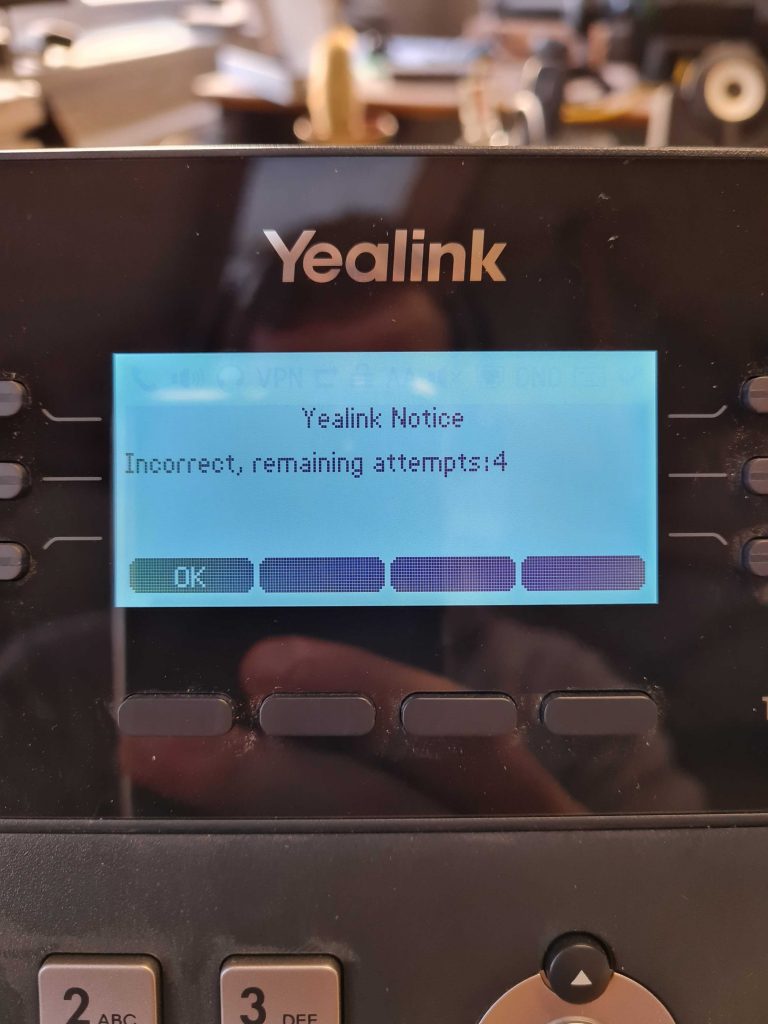
You get x5 attempts at entering the correct SN, if you enter the incorrect serial number you will get the following message:
Step 2:
Once you have entered the last 5 digits of the serial number the phone should then reset and boot up as normal.
Entering the serial number bounds the phone onto the Yealink RPS account.
If you run into any issues or would like more Yealink technical advice, please contact support@provu.co.uk or call 01484 840048 option 2.
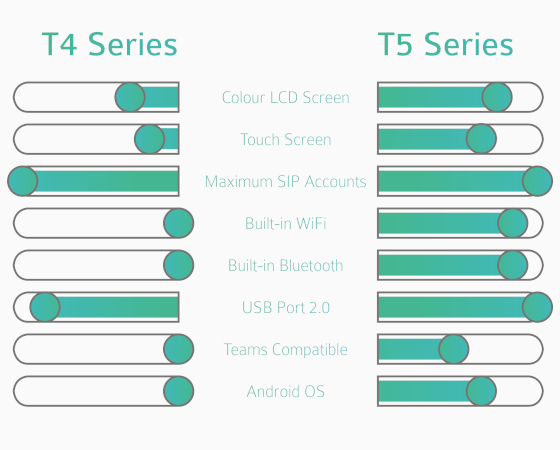
Still using the old T4 series? Why not upgraded to the T5 series? With reduced pricing across the T5 series you can now enchance your customers’ experience at no extra cost. Giving you access to a multitude of features such as touch screen, backlit colour screens as well as Teams compatibility, there is no better time to upgrade from the T4 series to the T5 series.
Still not convinced?
Take a look at how the T5 series stacks up against the T4.
Still need more convincing?
The Yealink T5 series was highly commended as the Best Device of 2020 in the ITSPA Awards.
Specifically the T58 with Camera was Highly Commended in the Best VoIP Device category at this year’s ITSPA Awards. An impressive device with many award winning features including Yealink’s Premium HD audio, compatibility with the CAM50 HD camera, 7” colour touch-screen and Microsoft Teams integration.
When the CounterPath Bria Enterprise application is used on a mobile device the native operating system (Android or iOS) can close the application when it is running in the background to preserve battery life.
As this can happen, it is important to make sure the application is still receiving phone calls regardless of whether the application is open and running in the foreground, or if the application is:
Running in the background
Closed (Manually, or by the Operating System to save battery)
The Bria Enterprise Application ensures this by utilising the Bria Push Servers to take over the SIP registrations of the accounts. In most cases this is when the application is closed, or running in the background.
Now, because some SIP servers support multiple SIP Registrations per SIP extension and some only allow one SIP registration per extension it’s important to configure the CCS provisioning portal with the correct value to reflect your SIP servers registration method (otherwise your clients may end up missing calls).
The table below shows the setting that changes the application and Push servers behaviour. Hopefully from the information below you can choose the appropriate value. Remember after each change in the CCS portal each user needs to logout of their application and back in again to apply the changes.
Setting: accountN.briaPush.RegistrationMode (where N is a number from 1 to 5)
Parameters: 0,1,2,3
accountN.briaPush.RegistrationMode controls how the combination of the Bria Enterprise client and the Bria Push server interact with the SIP server. Continuous (2) and Standard (0) are used if your VoIP service provider supports multiple registrations. Single Device Takeover (3) and Single Device Emulation (1) are used if your VoIP service provider does not support multiple registrations.
0:Standard (Dual Instances Alternate): Allows both the Bria Push servers and the Bria Enterprise clients to register to a customer’s SIP account in an alternating manner. In this mode, there may be short overlaps of registration where both the Bria Push server and the Bria Enterprise client are registered to the SIP server. Some PBXs, SIP servers or SIP services may have issues with this registration overlap. If you encounter an issue with registering to the SIP server or receiving push notifications, select a different mode. This option is equivalent to the deprecated pushSingleRegistration setting set to False.
1: Single Device Emulation (Single Instance Alternate): Ensures that both the Bria Enterprise client and the Bria Push server unregister before the other one registers. In other words, the Bria Enterprise client and the Bria Push server never register to a PBX, SIP server, or SIP service at the same time. The Bria Enterprise client controls the registrations by requesting the Bria Push server to register only after the Bria Enterprise client has de-registered and alternately, by receiving confirmation that the Bria Push server has de-registered before the Bria Enterprise client registers directly to the SIP server.
The Bria Enterprise clients will also not register while they are in a call delivered through the Bria Push server so that they do not cause potential issues with the call in progress being terminated by the SIP Server. This option is equivalent to the deprecated pushSingleRegistration setting set to True.
Note that when in the Single Device Emulation mode, there are periods of time (typically fractions of a second) when neither the Bria Enterprise client or the Bria Push server will be registered to the PBX, SIP server or SIP service. This gap could lead to a missed call if the call is presented to the SIP server at the same time that neither element is actively registered. This is a downside of the requirement of the SIP server that only one element can be registered at any one time.
2: Continuous (App Foreground, Server Persistent): Ensures that the Bria Push server is always registered on behalf of the Bria Enterprise client. The Bria Enterprise client still registers directly to the SIP server when in the foreground, but the Bria Push server does not de-register from the SIP server. In this mode, all inbound calls and all outbound calls from the Bria Enterprise client are handled by the Bria Push server.
The Continuous mode, in particular, is used when a SIP server supports multiple registrations at the same time. This mode avoids any gap in SIP registration because the Bria Push server is always registered on behalf of the Bria Enterprise client. In the event of a call to the SIP account while the Bria Enterprise client is in the foreground, the Bria Enterprise client will receive an INVITE directly from the SIP server and via the Bria Push server. The Bria Enterprise client will filter out these duplicate events and only allow one of the call attempts to progress.
3: Single Device Takeover (Single Instance Takeover): This is an enhanced option of the Single Device Emulation mode. The Bria Enterprise client and the Bria Push server take over registrations from each other without unregistering first. Neither the Push server or the Bria Enterprise client sends SIP de-registration messages when transitioning from one element to the other. It aims to eliminate gaps that are present in the other registration mode. This mode is in some cases beneficial for SIP servers that only support single registration.
Just for this month, we are delighted to offer you an exciting new Winter promotion bundle from Fanvil. Purchase an X6U and receive a WF20 WiFi dongle & PSU completely FREE. But hurry this offer is only available for a limited time, so get your work from home bundle today!
Fanvil X6U Enterprise IP phone
With the same great features and affordability you have come to expect from Fanvil, the X6U enterprise IP phone offers users a large 4.3” colour screen and 2 x 2.4” colour side displays for up to 65 digital label keys across multiple pages with 12 dual-coloured physical keys.
Fanvil WF20 USB WiFi dongle
Compatible with many of the Fanvil range, the WF20 WiFi dongle gives user devices extended connectability to wireless networks. Plug and play with the WF20 through connection to a USB port.
To place your order, simply contact one of our Fanvil experts today on 01484 840048 or email contact@provu.co.uk to find out more!
As we enter the festive season, it’s often a great time to get ahead for the New Year. As things begin to quieten down, it may mean you can get round to the tasks you don’t always have time for. Join us on 16th and 17th December for our virtual 3CX Basic Training course as we help you prepare to ramp up sales for 2021.
With a number of changes coming to 3CX in January, there couldn’t be a better time to gear up your partner status and maximise your potential as an accredited 3CX partner. From 1st January 2021, affiliate partners who have not achieved a revenue target of £2500 and haven’t obtained the bronze certification will be demoted. register now to get ahead of the changes.
Throughout this free course our Technical Solutions Director, Muhammad Bajwa will cover everything you need to know ready to sit the basic certification.
Course Topics Include:
3CX Installation
Installing the Apps
Desktop Phone Configuration
Firewall Configuration
Configuring VoIP Providers/SIP Trunks
Voicemail
Digital Receptionist
Simply complete our sign up form to virtually be there! To gain the basic certification you will be required to sit the 3CX basic exam, this will need to be completed following the course.